Freight, Warehousing & Scheduled Delivery Across the Capital Region
A Washington delivery can go off schedule in the final few blocks. The interstate portion may be predictable, but the District address could have a scheduled dock appointment, a commercial loading zone, a security desk, or an entrance that will not accommodate the vehicle carrying the freight.
Mitchell’sNY Logistics provides truck delivery, routed service, refrigerated and frozen transportation, white glove handling, freight forwarding, warehousing, and third-party logistics throughout the Northeast and along the I-95 corridor. For Washington, D.C.–bound work, the transportation plan accounts for the destination as well as the distance.
Our team reviews the freight, route, and receiving instructions before service is scheduled. That gives the customer a practical plan for one shipment, a recurring route, or a larger distribution program.
What Makes Washington, D.C. Freight Different?
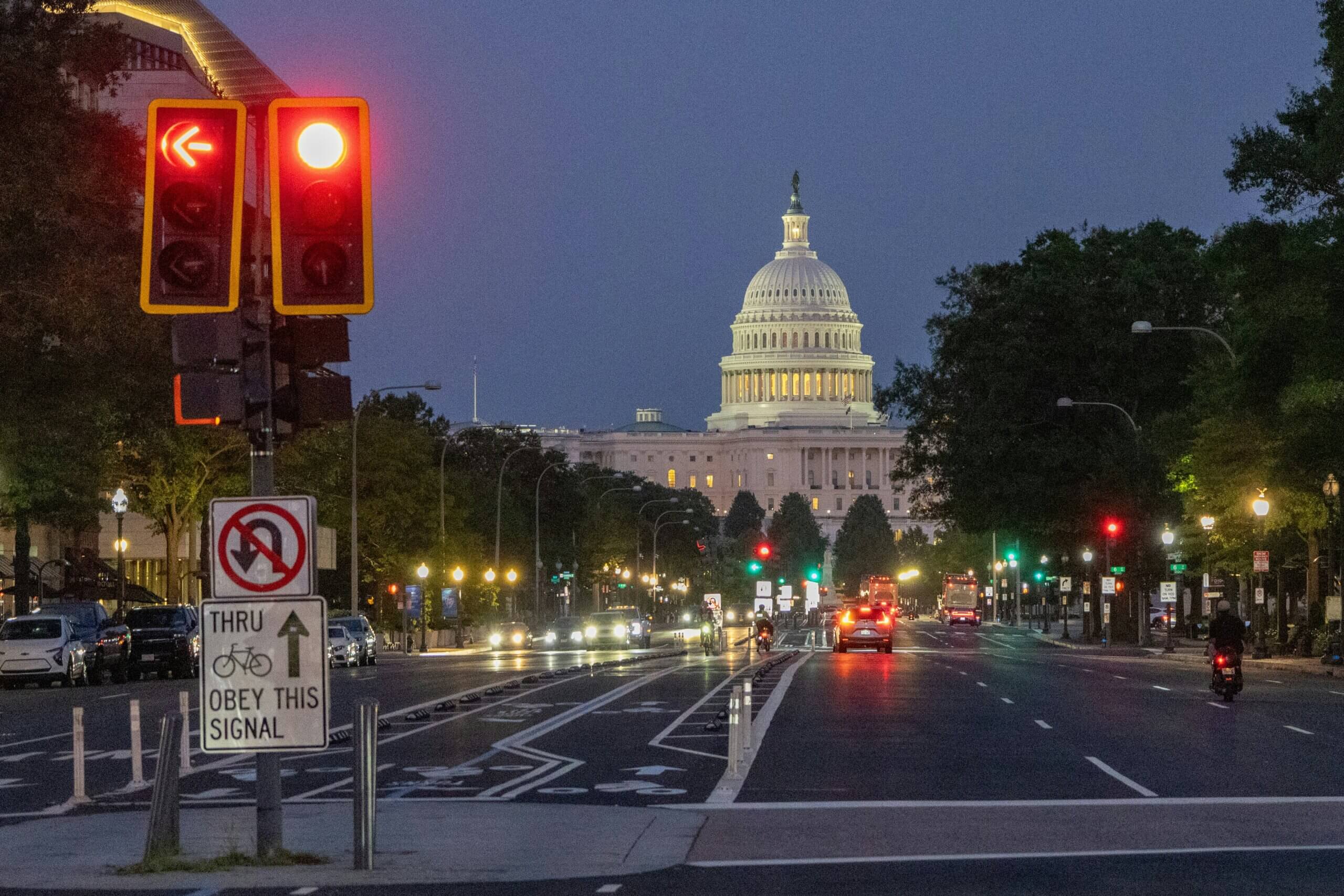
Our nation’s capital has a compact road network, limited truck parking, and heavy competition for curb space. Planned events, construction, demonstrations, and motorcades can also change traffic patterns with little notice.
The District Department of Transportation’s freight plan reports that trucks carry approximately 90% of District freight by tonnage and 70% by value. DDOT recommends that commercial vehicles remain on designated truck routes as long as practical before leaving them to make a local delivery.
That final leg deserves close attention. A useful route plan considers through-truck restrictions, bridge and tunnel clearances, vehicle size, and a practical, legally permitted approach to the receiving point. Oversize or overweight freight may require separate permits or escorts. DDOT’s District Freight Program provides current routing, restriction, clearance, and permitting resources for commercial vehicles.
Loading at the Curb or Dock
A delivery address alone does not show whether unloading will happen at a dock, in a commercial loading zone, or through another approved entrance. It also does not reveal whether the property limits vehicle height, requires an appointment, or expects the driver to call before arrival.
DDOT manages more than 600 curbside commercial vehicle loading zones, according to the agency’s District Freight Plan. Those zones are important where off-street loading is unavailable, but finding curb space can still be difficult. Posted hours, payment or permit requirements, and site-specific restrictions should be checked as part of the job.
A smaller truck may be the better choice for a constrained loading area even when the freight would fit on a larger vehicle. The tradeoff is capacity: changing equipment can affect the number of trips, route sequence, and cost. That decision should be made before the shipment reaches the District.
Secure Buildings and Inside Delivery
Government offices, contractors, associations, law firms, healthcare facilities, and corporate properties may require vendor check-in, driver identification, or advance vehicle information. Some buildings restrict delivery hours or direct vendors to an entrance that is separate from the public lobby.
Customers should provide any written instructions issued by the property and a receiving contact who can answer access questions. For white glove work, the details should also cover elevators, stairs, doorway measurements, placement, and light setup. These facts determine crew size, equipment, and the time reserved at the stop.
Convention, Hotel and Event Freight
Venue logistics follow the event schedule, not ordinary business hours. At the Walter E. Washington Convention Center, loading dock use is assigned around event activity, and freight delivery schedules must be shared with event management. The facility lists standard dock access as 6:00 a.m. to 9:00 p.m., although hours may change with the event schedule. It also states that event-related freight is not accepted before the licensed event period. Current procedures are available through Events DC exhibitor services.
Hotels, event spaces, and temporary installations present similar questions: when can the vehicle arrive, where can it wait, who accepts the shipment, and what must leave after the event? Transportation, short-term storage, move-out pickup, and return freight can be priced together when those needs are known in advance.
Available Delivery and Logistics Services in Washington, D.C.
Mitchell’sNY Logistics handles one-time truck deliveries, scheduled routes, multi-stop distribution, and last-mile service. Recurring routes are built around the customer’s stops and operating schedule, while we manage drivers, vehicles, tracking, fuel, tolls, and maintenance.
Temperature-controlled vehicles and storage are available for food, beverages, flowers, pharmaceuticals, and other products with documented temperature needs. Emergency mobile refrigeration is also available for planned events and time-sensitive situations, subject to equipment and site requirements.
White glove crews handle fragile, oversized, or high-value items that require inside delivery, placement, or light setup. Wine relocation and alcohol delivery are planned according to applicable licensing and destination requirements.
Mitchell’sNY also provides freight forwarding, warehousing, and 3PL services for businesses that need more than transportation. Our warehouse network includes facilities in Long Island City, Queens, Carlstadt, New Jersey, and Albany, New York. Washington, D.C.-bound inventory can be received, stored, consolidated, or cross-docked before moving south, depending on its origin and schedule.
These services are useful for hotels, restaurants, retailers, healthcare operations, offices, associations, government contractors, event producers, and other organizations. The right combination of transportation, storage, and handling services depends on the freight and destination, not simply the customer’s industry.

What We Need to Plan a D.C. Delivery
A complete quote request helps identify access problems early and reduces the chance of avoidable changes after the vehicle has been assigned. Please provide:
- Pickup and delivery addresses.
- Freight description, dimensions, weight, and piece or pallet count.
- Required date and appointment time.
- Dock, curbside, or inside-delivery instructions.
- Temperature requirements, if applicable.
- Security, identification, or vendor check-in procedures.
- On-site contact names and phone numbers.
- Elevator, stair, doorway, or placement details for white glove work.
- Storage, return freight, or post-event pickup needs.
Photographs, property instructions, and venue freight manuals are helpful when available. If part of the information is still pending, identify what needs confirmation so it can be addressed before the job date.
Regional Service Without Operating Your Own Fleet
A Washington business may need deliveries within the District, stops in Northern Virginia, or Maryland, and regular freight from New York or New Jersey. Managing separate providers for each leg creates more handoffs and more places for information to be lost or shipments delayed.
Mitchell’sNY Logistics can handle selected parts of the work or take responsibility for transportation, storage, and final delivery. For recurring service, the route can be adjusted when stop counts, volume, or equipment needs change. For a one-time shipment, the focus stays on meeting the receiving requirements at that address.
Each plan is built around the freight, schedule, and receiving requirements instead of forcing the customer into a standard delivery program.
Request a Washington, D.C. Logistics Plan
Send us the shipment details, addresses, timing, and access instructions. Mitchell’sNY Logistics will review the job and recommend the vehicle, services, and schedule needed to move the freight into or across the capital region.
