Managing logistics in-house can become increasingly difficult as a business grows. More orders may require additional warehouse space, employees, vehicles, technology, and coordination. Seasonal demand or expansion into new markets can add even more pressure.
Outsourcing logistics allows a business to hand some or all of these responsibilities to an experienced third-party logistics provider. Depending on the operation, a 3PL may manage warehousing, inventory, fulfillment, transportation, and delivery as an extension of the client’s team.
The benefits of outsourcing logistics go beyond moving products from one location to another. The right partnership can give a business access to capabilities that would be expensive or time-consuming to build internally.
Access to an Established Logistics Network
Building an internal logistics operation requires more than hiring drivers or renting warehouse space. A business must also coordinate facilities, vehicles, employees, technology, delivery schedules, and service partners.
A 3PL provider already has much of this infrastructure in place. That may include strategically located warehouses, trained personnel, established transportation routes, and relationships with other providers.
Access to an existing network can be especially valuable when a business needs to begin serving a new area. Instead of developing facilities and delivery operations from the ground up, the company can use the 3PL’s regional presence and operational knowledge.
The specific advantage will depend on the provider’s coverage and capabilities. Businesses should confirm that the provider can support the locations, shipment types, and delivery requirements involved.
Time and Cost Savings
Operating a private warehouse and transportation network comes with significant fixed and ongoing expenses. These may include:
- Warehouse Leases and Utilities
- Vehicles, Fuel, Tolls, and Maintenance
- Recruiting, Training, and Managing Employees
- Warehouse and Transportation Technology
- Insurance, Compliance, and Administrative Work
- Equipment For Storing, Handling, and Tracking Inventory
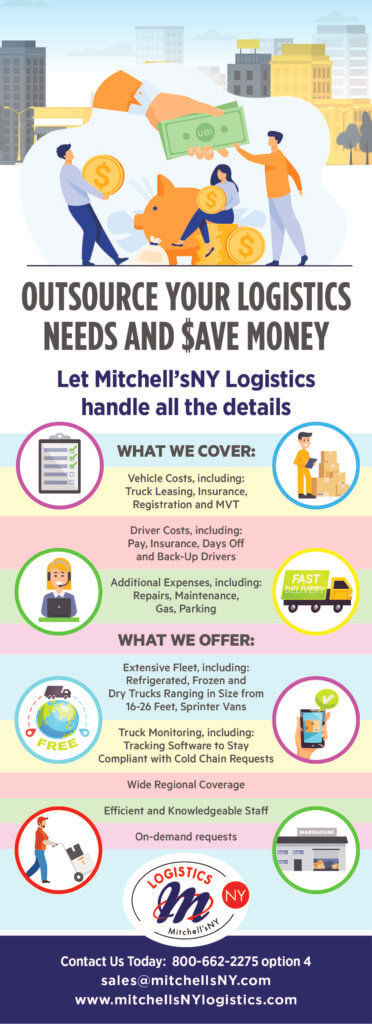
Logistics outsourcing can replace some of these investments with services matched to the company’s actual needs. This may help a business avoid committing capital to warehouse capacity, vehicles, or staffing it does not need year-round.
A 3PL can also handle time-consuming daily tasks such as receiving shipments, tracking inventory, preparing orders, scheduling deliveries, and resolving transportation issues. However, outsourcing does not automatically guarantee lower costs. Businesses should compare the provider’s complete pricing structure with the full cost of their current operation, including labor, equipment, facilities, and management time.
Logistics Expertise
Logistics decisions can affect inventory accuracy, delivery performance, operating costs, and customer satisfaction. As an operation becomes more complex, those decisions may require knowledge that falls outside the company’s primary area of expertise.
An experienced 3PL provider understands how warehousing, inventory management, fulfillment, and transportation work together. The provider can help identify practical ways to organize inventory, coordinate shipments, select appropriate vehicles, and respond when demand or delivery conditions change.
Specialized products may require additional capabilities. Perishable goods, pharmaceuticals, and other temperature-sensitive inventory, for example, may need refrigerated logistics and cold storage rather than standard storage and transportation.
Working with a provider that already understands these requirements can reduce the time a business spends developing specialized processes internally.
More Time to Focus on Core Business Operations
Every hour spent solving a warehouse problem, arranging a delivery, or managing transportation paperwork is time that cannot be devoted to the company’s customers, products, or long-term growth.
Outsourcing logistics allows internal teams to focus more of their attention on areas such as:
- Product Development
- Sales and Marketing
- Customer Relationships
- Financial Planning
- Employee Development
- Business Expansion
The logistics provider manages the operational responsibilities covered by the agreement, while the company retains oversight of its service standards and customer expectations. This is particularly helpful for businesses whose leadership teams have gradually taken on logistics work because no dedicated logistics department exists.
Flexibility and Scalability
Logistics requirements rarely remain fixed. Order volume can change throughout the year, and a business may need different amounts of storage, labor, or transportation capacity from one month to the next.
A 3PL provider may offer the flexibility to:
- Add warehouse capacity as inventory increases.
- Support higher fulfillment volume during busy periods.
- Scale operations back after seasonal demand ends.
- Add transportation routes or delivery areas.
- Accommodate new products or handling requirements.
- Respond to short-term projects without permanent infrastructure investments.
This scalability is one of the main advantages of 3PL outsourcing. Instead of building an operation around peak demand and carrying the associated costs during slower periods, a company can work with its provider to adjust resources as its needs change.
When Does Outsourcing Logistics Make Sense?
There is no single point at which every business should outsource logistics. The decision usually becomes worth considering when the existing operation begins limiting efficiency, customer service, or growth.
Your Business Is Growing
Higher order volume can strain warehouse capacity, staffing, and delivery operations. If employees are spending more time correcting shipping problems or finding space for inventory, an outside provider may help the business add capacity without building an entirely new internal operation.
You Are Expanding Into New Markets
Serving a new city or region may require warehouse space, local delivery knowledge, and new transportation relationships. A 3PL with an established presence in the target market can reduce the amount of infrastructure the business must create before it begins operating there.
Demand Changes Throughout the Year
Seasonal businesses may need substantially more storage, labor, and transportation during certain months. Outsourcing can provide access to additional resources during these periods without requiring the company to maintain them year-round.
Your Warehousing Needs Are Changing
A business may outgrow its current warehouse, need short-term overflow space, or require new services such as inventory management, pick-and-pack fulfillment, or last-mile delivery. Flexible warehousing and distribution services can help address those changes without an immediate long-term facility commitment.
Transportation Is Becoming More Complex
Adding more destinations, delivery windows, product types, or recurring routes can make transportation difficult to coordinate internally. A 3PL can help manage scheduling, vehicle selection, and local or regional truck delivery as those requirements become more demanding.
Logistics Is Taking Attention Away From the Business
Outsourcing may also make sense when owners, managers, or customer service employees are spending too much time coordinating shipments and resolving delivery problems. Even if an internal logistics operation is functioning, it may no longer be the best use of the company’s people or resources.
Concerns About Outsourcing Logistics
Handing an important part of the business to an outside provider naturally raises concerns. Companies may worry about losing control, receiving incomplete information, or placing their customer experience in someone else’s hands.
These risks should be addressed before the relationship begins.
Control and Accountability
Outsourcing logistics does not mean giving up all control. The business and its provider should clearly define responsibilities, operating procedures, approval requirements, and performance expectations. Both parties should understand who is accountable when an inventory discrepancy, missed delivery, or customer complaint occurs.
Communication
A 3PL should establish clear points of contact and procedures for routine updates, urgent requests, and problem resolution. The business should know when reports will be provided, what information they will include, and how quickly the provider is expected to respond.
Visibility
Companies need appropriate visibility into inventory, orders, and delivery performance. Before choosing a provider, ask what systems and reports are available, and whether they provide the level of information your team needs to make decisions.
Customer Experience
The logistics provider may interact directly with a company’s customers, retailers, job sites, or other business partners. Its reliability, professionalism, and communication can therefore affect how people view the client’s brand.
Discuss service standards in detail, especially when deliveries require appointments, specialized handling, installation coordination, or direct contact with customers.
What to Consider When Choosing a 3PL Provider
The right provider should fit the way the business actually operates. Major considerations include:
- Geographic Coverage
- Warehouse and Transportation Capacity
- Experience with the Company’s Products or Industry
- Inventory and Shipment Visibility
- Communication and Reporting Practices
- Ability to Accommodate Seasonal or Long-Term Growth
- Pricing Structure and Contract Terms
- References and Performance History
- Specialized Storage, Handling, or Delivery Capabilities
A low price may not provide good value if the provider cannot meet delivery windows, communicate effectively, or handle the company’s inventory correctly. For a more detailed evaluation process, read our article “How to Choose a 3PL Provider”.
Building a Successful 3PL Relationship
A successful outsourcing arrangement depends on more than selecting a capable provider. Both organizations must work together to maintain the relationship.
Establish Clear Communication
Identify the primary contacts on both sides and agree on how routine updates, exceptions, and urgent issues will be handled. Regular communication helps prevent small problems from becoming larger operational disruptions.
Set Shared Goals
The business and its 3PL partner should agree on what success looks like. Goals might involve on-time delivery, order accuracy, inventory visibility, faster fulfillment, or the ability to support a new market. These goals should be specific enough to measure over time.
Plan for Change
The provider should understand both current requirements and likely future needs. Discuss seasonal peaks, anticipated growth, new products, and geographic expansion so the logistics plan can adapt as the business changes.
Review Performance Regularly
Ongoing reviews create an opportunity to discuss results, address problems, and improve processes. Metrics should reflect the services being provided and may include on-time delivery, order accuracy, response time, or inventory accuracy.
Is Outsourcing Logistics Right for Your Business?
Outsourcing logistics can be a practical option when internal operations are becoming too expensive, time-consuming, or difficult to scale. It can give a business access to established facilities, transportation resources, and logistics expertise while allowing its own team to concentrate on customers and growth.
Mitchell’sNY Logistics supports businesses with third-party logistics, warehousing, inventory management, fulfillment, and transportation throughout New York City, the Northeast, and the I-95 corridor. With access to multiple warehouse facilities, our team can develop a logistics plan based on your inventory, delivery requirements, and growth plans.
Request a quote to discuss which parts of your logistics operation could be managed more efficiently with Mitchell’sNY Logistics.